My values for the "Best Vote-for-or-against-k" column never matched the paper's, and this weekend I fed all the context into AI to see if it could resolve the discrepancy, and it found errors in the original paper:
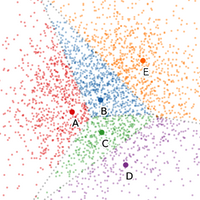
For five candidates and k=2, Weber treats the relevant five-dimensional region of utility profiles as a simplex and calculates its centroid by averaging six listed vertices. However, the actual region has eight vertices, not six, and is not a simplex. Calculating the centroid of the actual region gives effectiveness of 85.2%, rather than the published 86.96%. An independent order-statistic calculation and election simulations agree with the corrected value.
This also affects which k is optimal and the many-candidate limit. The corrected optimal effectiveness approaches 86.6%, not 92.3%, with k/m approaching one-half, rather than about one-third.
The method’s ballot definition and optimal strategy are not the problem; the error is in the geometric calculation used to derive its effectiveness.
The lower values in that column happen to be correct, but the higher ones are not. I'm going to update my code to show both the paper's values and corrected values.
There is also a typo in the table on p. 14 (p.71 in the PDF): The denominator of b₂ should have a 2, not an 8.